Total de visualizações de página

terça-feira, 31 de maio de 2011

Em portugues!!!

Hoje estou com a minha melhor amiga Júlia  que tambem tem um blogg : http://alittleofeverythingjuliaelaura.blogspot.com


Juuu


to com saudades bjss


*Quem quiser ler va no google tradutor


bjsss


on aula

segunda-feira, 30 de maio de 2011

Autumn Vintage


                                                             WOW! ENJOY ;)

sábado, 28 de maio de 2011

Lip Soda


I've been looking for some cool stuff to post here on the blog, and thought so-called Lip Soda, are lipsticks with taste, smell and packaging of soda ...
Very cool! ENJOY;)

*-*


:')

Icecreams


YUMMY, ENJOOOY!


OH MY...


gosh....


Frozen Yogurt

Frozen yogurt (also known as frozen yoghurt or froz yog or by the tradenames FroYo and Frogurt) is a frozen dessert containing yogurt or other dairy products. It is slightly more tart than ice cream, as well as lower in fat (due to the use of milk instead of cream). It differs from ice milk (more recently termed low-fat or light ice cream), which does not include yogurt as an ingredient.


yummy yummy!
Enjoy ;)

Victoria´s Cakes or Sponge Cake -- Everything about Cakes and Cupcakes - Part 5

Sponge cake is a cake based on flour (usually wheat flour), sugar, and eggs, sometimes leavened with baking powder or soaked in rum, that derives its structure from an egg foam into which the other ingredients are folded. In addition to being eaten on its own, it lends itself to incorporation in a vast variety of recipes in which pre-made sponge cake serves as the base. The sponge cake is thought to be one of the first of the non-yeasted cakes, and the earliest recorded sponge cake recipe in English is attested to the 1615 book of English poet and author Gervase Markham entitled; The English Huswife, Containing the Inward and Outward Virtues Which Ought to Be in a Complete Woman.  Though it does not appear in Hannah Glasse's The Art of Cookery in the late 18th century, it is found in Lydia Maria Child's The American Frugal Housewife, indicating that sponge cakes had been established at Grenada in the Caribbean, by the early 19th century. Variations on the theme of a cake lifted, partially or wholly, by trapped air in the batter exist in most places where European patisserie has spread, including the French Génoise, the Portuguese pão-de-ló, the Anglo-Jewish "plava" and the possibly ancestral Italian/Sephardic Jewish pan di Spagna ("Spanish bread", from the Ladino pan d'España, transferred to the Greek as pandespáni). Derivatives of the basic sponge cake idea include the American chiffon cake and the Latin American Tres leches cake. The spnge cake is a variation on the so called pan di Spagna (litterally 'bread of Spain'), a cake invented by Giobatta Cabona (a cook from Genoa at the service of the genoese ambassador in Spain, marquis Domenico Pallavicini) on the occasion of a banquet, where he presented a cake of incredible lightness that took its name to honor the Spanish court.


Teacakes -- EVERYTHING about cupcakes... [yummy] - Part 4

A teacake or tea cake is a kind of bread or cake. The name is commonly used for whatever bread or cake is traditionally served for afternoon tea within a region, but can be applied loosely to any kind of cake that is sturdy enough to be picked up with the fingers. Teacake is normally not frosted.


ENJOY ;)

Starbucks

Starbucks Corporation  is an international coffee and coffeehouse chain based in Seattle, Washington. Starbucks is the largest coffeehouse company in the world, with 17,009 stores in 50 countries, including over 11,000 in the United States, over 1,000 in Canada, and over 700 in the United Kingdom.
Starbucks sells drip brewed coffee, espresso-based hot drinks, other hot and cold drinks, coffee beans, salads, hot and cold sandwiches and panini, pastries, snacks, and items such as mugs and tumblers. Through the Starbucks Entertainment division and Hear Music brand, the company also markets books, music, and film. Many of the company's products are seasonal or specific to the locality of the store. Starbucks-brand ice cream and coffee are also offered at grocery stores.
From Starbucks' founding in later forms in Seattle as a local coffee bean roaster and retailer, the company has expanded rapidly. In the 1990s, Starbucks was opening a new store every workday, a pace that continued into the 2000s. The first store outside the United States or Canada opened in the mid-1990s, and overseas stores now constitute almost one third of Starbucks' stores. The company planned to open a net of 900 new stores outside of the United States in 2009, but has announced 900 store closures in the United States since 2008.
Starbucks has been a target of protests on issues such as fair-trade policies, labor relations, environmental impact, political views, and anti-competitive practices.
                                  Some pictures of starbucks


Remember: Starbucks is the inspiration of my blog ;)
YUMMY YUMMY YUMMY
ENJOY ;)


sexta-feira, 27 de maio de 2011

Muffins -- Everything about Cakes and Cupcakes - Part 3

A muffin is an American English name for a type of bread that is baked in small portions. Many forms are somewhat like small cakes or cupcakes in shape, although they usually are not as sweet as cupcakes and generally lack frosting. Savory varieties, such as cornbread muffins, also exist. They generally fit in the palm of an adult hand, and are intended to be consumed by an individual in a single sitting.
Outside the United States of America, muffin can also refer to a disk-shaped muffin, usually called an English Muffin outside of England. As American-style muffins are also sold in Commonwealth countries, the term muffin can refer to either product, with the context usually making clear which is meant.
There are many varieties and flavors of muffins made with a specific ingredient such as blueberries, chocolate chips, cucumbers, raspberry, cinnamon, pumpkin, date, nut, lemon, banana, orange, peach, strawberry, boysenberry, almond, and carrot, baked into the muffin. Muffins are often eaten for breakfast; alternatively, they may be served for tea or at other meals.


                                   Some pictures of muffins:


YUMMY... Enjoy ;)

This is my cupcake (I made)


What do you think about my cupcake? please comment!

How to Make Cupcakes - (Everything about Cakes and Cupcakes) - Part 2

EVERYTHING about Cakes and Cupcakes... [yummy] - PART 1


A cupcake (British English: fairy cake; Australian English: patty cake or cup cake) is a small cake designed to serve one person, frequently baked in a small, thin paper or aluminum cup. As with larger cakes, frosting and other cake decorations, such as sprinkles, are common on cupcakes.
The first mention of the cupcake can be traced as far back as 1796, when a recipe notation of "a cake to be baked in small cups" was written in American Cookery by Amelia Simms. The earliest documentation of the term cupcake was in “Seventy-five Receipts for Pastry, Cakes, and Sweetmeats” in 1828 in Eliza Leslie's Receipts cookbook.
In the early 19th century, there were two different uses for the name cup cake or cupcake. In previous centuries, before muffin tins were widely available, the cakes were often baked in individual pottery cups, ramekins, or molds and took their name from the cups they were baked in. This is the use of the name that has persisted, and the name of "cupcake" is now given to any small cake that is about the size of a teacup. The name "fairy cake" is a fanciful description of its size, which would be appropriate for a party of diminutive fairies to share.
The other kind of "cup cake" referred to a cake whose ingredients were measured by volume, using a standard-sized cup, instead of being weighed. Recipes whose ingredients were measured using a standard-sized cup could also be baked in cups; however, they were more commonly baked in tins as layers or loaves. In later years, when the use of volume measurements was firmly established in home kitchens, these recipes became known as 1234 cakes or quarter cakes, so called because they are made up of four ingredients: one cup of butter, two cups of sugar, three cups of flour, and four eggs. They are plain yellow cakes, somewhat less rich and less expensive than pound cake, due to using about half as much butter and eggs compared to pound cake. The names of these two major classes of cakes were intended to signal the method to the baker; "cup cake" uses a volume measurement, and "pound cake" uses a weight measurement.
In the early 21st century, a trend for cupcake shops was reported in the United States, playing off of the sense of nostalgia evoked by the cakes. In New York City, cupcake shops like Magnolia Bakery gained publicity in their appearances on popular television shows like HBO's Sex and the City. In 2010, television presenter Martha Stewart published a cook book dedicated to cupcakes.


Some pics of cupcakes ...

How to Make Cupcakes How to Make Cupcakes

How to Make Cupcakes1 How to Make Cupcakes

yummy... enjoy ;)


The picture of the week:


AMAZING HAHAHA
ENJOY ;)

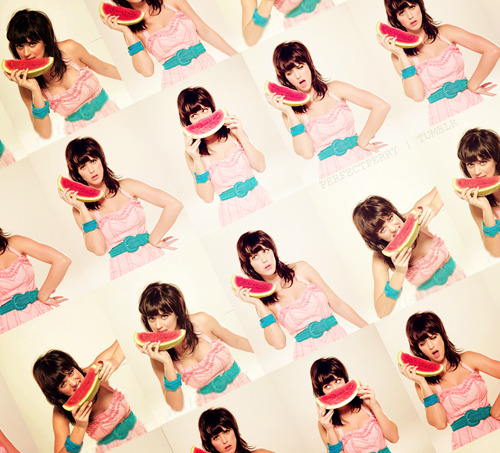
Katy Perry´s Looks


ENJOY ;)

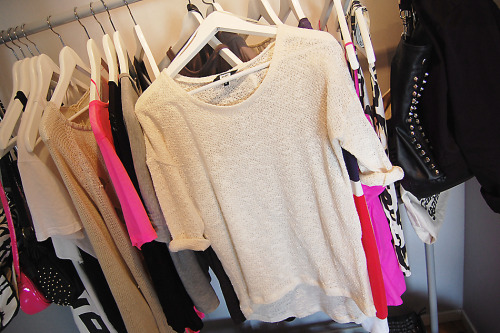
Fashion - Closets


About Domo [I HEART]


Domo (どーもくん Dōmo-kun?) is the official mascot of Japan's NHK television station, appearing in several 30 second stop-motion interstitial sketches shown as station identification during shows.
The name "Domo" was acquired during the second episode of his show in which a TV announcer said, "dōmo, konnichiwa" (どうも、こんにちは?), which is a greeting meaning something along the lines of, "Well, hello there!", but which can also be interpreted as "Hello, Domo", and thus is a convenient pun (dajare). The kun suffix on "Domo-kun," the name used to describe the character in the Japanese versions, is a Japanese honorific often used with young males.


And, do you like DOMO? comment, please ;)

yummy...


ENJOY ;)

Macaron


More about macarrons:


A macaron (French pronunciation: [makaˈʁɔ̃]), is a sweet confectionery made with egg whites, icing sugar, granulated sugar, almond powder or ground almond, and food coloring. The macaron is commonly filled with buttercream or jam filling sandwiched between two cookies. Its name is derived from an Italian word "maccarone" or "maccherone". This word is itself derived from ammaccare, meaning crush or beat, used here in reference to the almond paste which is the principal ingredient. It is meringue-based: made from a mixture of egg whites, almond flour, and both granulated and confectionery sugar.
The confectionery is characterized by its smooth, domed top, ruffled circumference (referred to as the "foot"), and flat base. It is mildly moist and easily melts in the mouth.
Macarons can be found in a wide variety of flavors that range from the traditional (raspberry, chocolate) to the new (truffle, green matcha tea). The fillings can range from jams, ganache, or buttercream. Since the English word macaroon can also refer to the coconut macaroon, many have adopted the French spelling of macaron to distinguish the two items in the English language. However, this has caused confusion over the correct spelling of the cookie/biscuit. Some recipes exclude the use of macaroon to refer to this French confection while others think that they are synonyms.

yummy... :)

ENJOY ;)


quinta-feira, 26 de maio de 2011

Hi, people!!!

Welcome to my blog!
I hope you like, and if you like, FOLLOW ME! I follow back ;)
About me:
I am Brazilian, and my name is Giovana.
I love write in blogs...
I am peabody (Black Eyed Peas fan) and I´m KatyCat (Katy Perry´s Fan)
I love music, computer, internet, blogs, Paris, London, USA, Asia, my idols.
And I repeat:
I HOPE YOU LIKE ME AND MY BLOG ;)
thanks.